

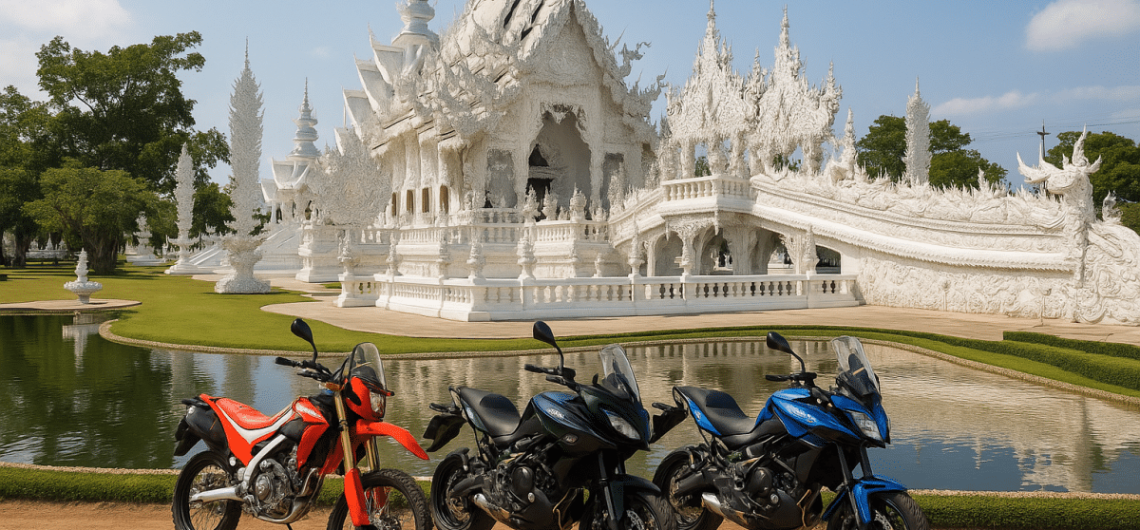
When Heaven Meets the Highway: Your Two-Wheeled Temple Adventure Begins
You’re cruising through Northern Thailand’s mountain roads, the morning sun catching your helmet visor just right, and ahead of you looms something that looks like it escaped from a fever dream. The White Temple rises from the landscape like a crystallized wedding cake designed by an artist who definitely skipped his morning coffee and went straight to the supernatural stuff. This isn’t your average motorcycle tour—it’s the kind of day that makes your Instagram followers suspicious you’ve been using filters, except you haven’t. Welcome to the Chiang Rai White Temple and Golden Triangle guided tour, where Buddhist philosophy meets big biking tour philosophy, and both involve a lot of curves.
The ride from Chiang Mai to Chiang Rai covers roughly 180 kilometers of some of Thailand’s most spectacular scenery. Unlike being cramped in a tour bus where you’re basically a sardine with a camera, a motorbike tour gives you the freedom to actually feel the journey. The wind in your face, the scent of roadside noodle stalls mixing with mountain air, and that glorious moment when you lean into a curve perfectly—this is what motorcycle touring is all about. Big Bike Tours has been perfecting this route since before it was cool to post travel photos online, and they know every coffee stop, photo opportunity, and pothole worth avoiding.
The Star of the Show: Wat Rong Khun’s Otherworldly Elegance
The White Temple, or Wat Rong Khun if you want to impress locals with your pronunciation skills, is what happens when a brilliant artist named Chalermchai Kositpipat decides traditional temple design is fine, but why not add some pizzazz? Starting in 1997, Kositpipat poured his personal fortune and artistic vision into creating something that makes other temples look like they forgot to get dressed. The entire structure gleams white to symbolize Buddha’s purity, but it’s the mirror fragments embedded in the plasterwork that really steal the show. On a sunny day, the temple practically blinds you with enlightenment—literally and figuratively.
What makes this stop on your motorbike tour particularly special is the timing. Most bus tours don’t roll in until mid-morning, which means if you start your motorcycle tour early, you get those golden hour shots without fighting through crowds. The bridge leading to the main temple is surrounded by hundreds of reaching hands—they represent desire and temptation, which in Buddhism are things you’re supposed to overcome. The irony is that everyone desires to take a perfect photo here, which creates a bit of a philosophical traffic jam during peak hours. This is where touring timing becomes crucial for avoiding crowds.
The White Temple dress code is straightforward but strictly enforced. Your shoulders and knees must be covered—no exceptions, no matter how hot it gets. This isn’t the temple being difficult; it’s about showing respect for a sacred space that happens to look like it was designed by Tim Burton’s more optimistic cousin. Big Bike Tours’ guides always remind riders to bring appropriate clothing or a sarong that can double as coverage. Some travelers learn this the hard way when they arrive in shorts and tank tops, only to discover the small shop selling overpriced cover-ups. Don’t be that person.
Inside the Impossible: Where Pop Culture Meets the Profound
Here’s where things get weird in the best possible way. Photography isn’t allowed inside the main temple, which initially seems like a cruel joke for a place this photogenic. But there’s method to this madness—the interior murals include everything from Superman to Harry Potter to images that reference modern-day disasters. Kositpipat’s vision wasn’t to create a museum piece frozen in time; he wanted to show how Buddhist teachings apply to contemporary life. The temple photography rules exist to preserve these delicate artworks and maintain some sanctity in a space that’s basically a pop culture philosophy lesson.
The main hall, or ubosot, took years to construct and still isn’t completely finished. Kositpipat has said he expects the entire complex to take until 2070 to complete—talk about a long-term project. The artist himself sometimes shows up at the temple, adding new touches and making sure tour groups aren’t treating his life’s work like a theme park. This personal connection makes the White Temple unique among Thailand’s tourist attractions. You’re not just seeing a historical artifact; you’re witnessing a living artwork that’s still evolving.
For motorcycle tour participants, the White Temple visit typically lasts about an hour and a half, which gives you enough time to explore the grounds, snap photos from every conceivable angle, and use what might be the most luxurious public restroom in Southeast Asia. Yes, really. The golden bathroom building represents material wealth, and it’s genuinely nicer than most five-star hotel facilities. This attention to detail extends to everything Kositpipat creates, making even a bathroom break part of the artistic experience.
The Blue Temple and Black House: Completing the Color Spectrum
No proper guided tour of Chiang Rai is complete without visiting the region’s other famous artistic attractions. The Blue Temple, or Wat Rong Suea Ten, is like the White Temple’s younger sibling who decided to go in a completely different direction. Designed by Phuttha Kabkaew, who studied under Kositpipat, this temple was completed in 2016 and showcases brilliant sapphire and cerulean hues that make you wonder if someone turned up the saturation on reality. The name translates to “House of the Dancing Tiger,” referring to legends about tigers that once roamed the abandoned temple grounds.
The Blue Temple Rong Suea Ten is far less crowded than its white counterpart, which makes it perfect for that afternoon portion of your motorbike tour when you’re tired of jostling for space. The entrance is free, which is a pleasant surprise in a world where everything seems to come with an admission fee. Inside, a massive white Buddha statue sits against walls painted in shades of blue that would make the ocean jealous. The artwork here is more contemporary than traditional, featuring bold colors and modern interpretations of Buddhist stories. Photography is allowed inside, so you can finally satisfy that Instagram craving without guilt.
The Black House Baan Dam represents the dark to the White Temple’s light. Created by the late artist Thawan Duchanee, this isn’t actually a temple but rather a museum complex of about forty buildings scattered across a beautiful park. Unlike the heavenly aesthetics of Wat Rong Khun, Baan Dam explores themes of death, suffering, and the darker aspects of human existence. The buildings are filled with animal bones, skins, and horns arranged into furniture and art pieces that range from fascinating to slightly disturbing, depending on your comfort level with mortality reminders.
For riders on a motorcycle tour, Baan Dam offers a completely different vibe. Where the White Temple is about purity and the Blue Temple celebrates color, the Black House forces you to contemplate impermanence and the cycle of life and death that’s central to Buddhist philosophy. It’s heavy stuff, but Duchanee presents it beautifully. The grounds are serene, the architecture is stunning, and it’s actually quite peaceful despite the macabre subject matter. Many visitors find it more thought-provoking than the more famous temples.
Golden Triangle: Where Three Countries Play Nice
After your temple hopping, the motorbike tour continues to one of Southeast Asia’s most historically significant locations. The Golden Triangle marks the point where Thailand, Myanmar, and Laos meet at the confluence of the Ruak and Mekong rivers. The name comes from its notorious past as the world’s largest opium-producing region, though these days the only thing getting trafficked is tourist selfies and overpriced souvenirs. The area has transformed from criminal enterprise hub to family-friendly tourist destination, which is probably for the best.
The Hall of Opium museum here tells the fascinating and often dark history of the drug trade that once defined this region. It’s surprisingly comprehensive and doesn’t pull punches about the devastation opium caused. For motorcycle tour participants, this stop provides important context about Northern Thailand’s history and the incredible transformation the region has undergone. The museum is well-designed, air-conditioned (crucial in the afternoon heat), and includes interactive exhibits that make the history accessible without being preachy.
From the Golden Triangle viewpoint, you can see three countries at once, which is oddly thrilling even though they all look quite similar from a distance. The Mekong River is wide and brown here, flowing with purpose toward Vietnam. Long-tail boats offer short tours for those who want to technically claim they’ve been to Laos for fifteen minutes, though most guided tour groups stick to the Thai side. The area has been heavily developed for tourism, with restaurants, shops, and photo opportunities carefully arranged for maximum Instagram impact.
The big biking tour route from Chiang Rai to the Golden Triangle covers about 70 kilometers of winding roads that reward attentive riders with stunning views. This isn’t highway cruising; you’re navigating curves that follow the natural contours of the landscape. The road passes through small villages where life continues largely unchanged by tourism, tea plantations that carpet the hillsides in geometric patterns, and viewpoints where stopping for photos is basically mandatory. This is why people choose motorcycle tours over buses—you’re not rushing past the scenery; you’re part of it.
Practical Magic: Making Your Tour Timing Work
The tour timing to avoid crowds requires some strategic planning. Most tour buses from Chiang Mai don’t arrive at the White Temple until around 10 AM, which means early risers get the place to themselves. Big Bike Tours typically starts their guided tour at 7 AM, putting riders at Wat Rong Khun by 9 AM at the latest. This early start might seem painful when your alarm goes off, but it’s worth it when you’re taking photos in peace while bus tourists are still eating breakfast in Chiang Mai.
The afternoon typically gets hot in Northern Thailand, with temperatures pushing into the low 90s Fahrenheit (low 30s Celsius for everyone else). This is actually perfect timing for the Blue Temple visit because it’s less crowded in the afternoon, and the interior offers welcome air conditioning. The Black House works well for mid-to-late afternoon exploration since much of the complex is shaded by large trees. The Golden Triangle is best visited closer to sunset when the light turns everything golden and the temperature becomes tolerable.
For serious photographers, the temple photography rules require some adaptation. At the White Temple, you’re limited to exterior shots, but the exterior is where all the visual drama happens anyway. The bridge of temptation, the ornate gables, the way mirrors catch and reflect light—these elements create endless photographic possibilities. The trick is shooting early or late when the harsh midday sun isn’t washing out your images. Many professional photographers on motorbike tours bring polarizing filters to cut glare and enhance the white surfaces against the blue sky.
The Big Bike Tours Difference: Why Guided Beats Solo
You might wonder why anyone would choose a guided tour over renting a bike and figuring it out themselves. Fair question. The answer comes down to local knowledge, logistics, and not wanting your vacation to turn into an accidental adventure in the wrong direction. Big Bike Tours’ guides know every curve, every speed trap, every roadside restaurant where the food is genuinely good rather than tourist-trap mediocre. They’ve memorized the timing for each stop, the best parking spots, and which vendors sell authentic handicrafts versus factory-made knockoffs labeled “authentic.”
The motorcycle tour experience includes well-maintained bikes, which matters more than you might think when you’re hours from Chiang Mai on mountain roads. The company maintains their fleet to European standards, which means you’re not gambling on whether your rental scooter will make it up the next hill. They provide backup support, first aid trained staff, and someone who actually knows how to fix a flat tire properly. These details seem minor until they’re not, and then they’re everything.
Another advantage of a guided tour is pacing. Solo riders tend to either rush through stops or linger too long, throwing off their entire schedule. Guides know exactly how long each attraction needs and keep the group moving efficiently without feeling rushed. They also handle the boring stuff—parking arrangements, admission fees, restaurant reservations—so you can focus on actually enjoying the experience. It’s the difference between being on vacation and being on a logistical planning exercise that happens to involve temples.
The social aspect of motorcycle tours shouldn’t be underestimated either. Riding solo has its appeal, but sharing the experience with other riders creates camaraderie that makes good days great and challenging days manageable. When you all pull over at a viewpoint and someone cracks a joke about nearly missing that last curve, it becomes a shared memory rather than a private anxiety. Big Bike Tours’ groups are intentionally kept small—usually around ten to twelve riders—so it feels like exploring with friends rather than herding a crowd.
Dress Code Decoded: What to Actually Wear
Let’s talk practicalities about the White Temple dress code and temple visits in general. The rules are simple but non-negotiable: cover your shoulders and knees. This means no tank tops, no shorts above the knee, no bare shoulders peeking through. Some temples are stricter than others, but all the major sites in Chiang Rai enforce these standards. The good news is that lightweight, breathable fabrics exist that cover appropriately while keeping you from overheating during your motorbike tour.
For riders, this creates an interesting wardrobe challenge. You need clothes suitable for motorcycling—ideally with some protection if you take a spill—that also work for temple visits. Many experienced riders on guided tours wear lightweight riding pants that cover the knees, then carry a breathable long-sleeve shirt for temple stops. Women often pack a long scarf that can cover shoulders or be wrapped as a skirt if needed. The key is layers you can add or remove as the situation requires.
Footwear deserves special mention because you’ll be removing shoes constantly at temple entrances. Motorcycle boots aren’t ideal for this, which is why many riders bring slip-on shoes in their bike’s storage compartments. Temple floors can get scorching hot in the afternoon sun, and nobody wants to do the burning-foot dance while trying to appreciate sacred art. Comfortable, easily removable shoes that can handle both motorcycle riding and temple walking are your best bet.
The temple photography rules extend beyond just interior bans. Even where photography is allowed, certain behaviors are prohibited everywhere. Don’t climb on statues for photos, no matter how great the angle would be. Don’t turn your back on Buddha images in disrespectful ways. Don’t use flash on delicate murals. Don’t interrupt people who are actually praying for your perfect selfie. Common courtesy goes a long way, and Big Bike Tours’ guides will remind you of these expectations before each stop.
Fueling Up: The Food Stops That Make or Break Your Day
Here’s something tour brochures often skip: a big biking tour is hungry work. You’re burning calories from concentration, physical exertion, and the mental energy of processing so much visual stimulation. Big Bike Tours builds meal stops into their itinerary, but these aren’t random roadside gambles. These are carefully selected restaurants that serve genuinely good Northern Thai food while accommodating groups of riders without making everyone wait forever.
Lunch typically happens around midday at a restaurant between Chiang Rai and the Golden Triangle. Northern Thai cuisine differs significantly from what most travelers know as “Thai food.” Expect khao soi (coconut curry noodle soup that’s basically happiness in a bowl), sai oua (Northern Thai sausage with lemongrass and herbs), nam prik (chili dips served with vegetables), and sticky rice that you eat with your hands like the locals do. These meals are included in most motorcycle tour packages, which removes the stress of figuring out ordering and payment when you’re already tired from riding.
Coffee stops are sacred on any guided tour, and Northern Thailand takes its coffee seriously. The region grows excellent Arabica beans, and you’ll find cafes that would hold their own against any hipster establishment in Portland or Melbourne. These breaks aren’t just about caffeine—they’re chances to regroup, use clean bathrooms, and mentally prepare for the next leg of riding. The guides know which cafes have the best views, the fastest service, and importantly, parking spaces that can accommodate a group of motorcycles.
Snack stops might seem trivial, but they’re perfectly timed for blood sugar management. Thailand has an incredible array of street food and small snacks perfect for riders. Fresh fruit from roadside vendors, coconut ice cream, mango sticky rice—these aren’t tourist traps; they’re legitimate Thai treats that happen to be conveniently packaged for people on the move. Your guided tour will likely include a few of these stops, chosen for quality and convenience.
Weather Wisdom and Seasonal Strategies
The best time for this motorcycle tour is during Thailand’s cool and dry season, roughly November through February. “Cool” is relative—you’re still looking at 70-80°F (21-27°C) most days—but it’s comfortable for riding and won’t leave you melting by midday. The skies are typically clear, which makes for better photos and more enjoyable riding. This is peak tourist season, which means more crowds at the White Temple, but the tour timing strategies mentioned earlier help mitigate this.
March through May brings the hot season, when temperatures can push into the 95-100°F (35-38°C) range. This isn’t impossible for motorcycle tours, but it requires more breaks, more water, and realistic expectations about energy levels. The upside is fewer tourists, which means better access to attractions and more personalized attention from guides. If you can handle the heat and hydrate properly, this can actually be an excellent time for a guided tour.
The rainy season runs roughly June through October, bringing afternoon thunderstorms that can turn roads slippery and reduce visibility. This doesn’t mean tours can’t happen—Big Bike Tours operates year-round—but it does mean more flexible scheduling and rain gear. Some riders actually prefer this season because the landscapes are lushest, everything is green and alive, and the rain brings dramatic clouds that make for moody photos. Just be prepared for wet conditions and accept that not every day will go exactly as planned.
Beyond the Big Three: Hidden Gems Along the Route
While the White Temple, Blue Temple, and Golden Triangle are the main attractions, experienced guides know the smaller stops that transform a good motorbike tour into an exceptional one. There’s a small waterfall about halfway to Chiang Rai where the water is always cool and clear, perfect for a quick dip if time allows. Local fruit stands sell mangosteen, rambutan, and other tropical fruits at prices that make buying
from supermarkets back home seem criminal.
Small village temples dot the route, places that never make guidebooks but showcase authentic local Buddhism without the crowds. These aren’t on every guided tour itinerary—they’re the kind of places guides share when groups seem interested in more than just checking boxes. The architecture might be simpler, the decorations less elaborate, but there’s something genuine about watching local people practice their faith without tourists documenting every moment.
Viewpoints along the mountain roads offer perspectives you simply can’t get from a tour bus. The ability to stop whenever something catches your eye is one of the great advantages of a motorcycle tour. A particularly stunning vista, an interesting roadside market, a local festival happening in a small town—these spontaneous stops often become favorite memories. Big Bike Tours’ guides are excellent at reading their groups and knowing when to stick to the schedule versus when to pause for something special.
The Ride Home: Processing Your Day
By late afternoon, as you head back toward Chiang Mai, the day’s experiences start to settle in. Your camera is full of photos, your body is pleasantly tired from riding, and your mind is processing everything you’ve seen. This is when you appreciate having a guided tour rather than having to navigate back yourself while exhausted. The guides know the fastest routes and can adjust for traffic, road construction, or weather conditions you wouldn’t know about.
The sunset ride back can be spectacular, with the light turning everything golden and shadows lengthening across rice fields. This is motorbike tour magic—the moment when you’re not thinking about destinations or schedules, just experiencing the simple pleasure of riding a good bike on a beautiful road. The White Temple and Golden Triangle were incredible, but this quiet hour on the bike is what makes you understand why people get obsessed with motorcycle touring.
Evening typically arrives as you pull back into Chiang Mai, tired but satisfied. A hot shower, a cold beer, and dinner at one of the city’s excellent restaurants mark the perfect end to the day. You’ll probably spend the evening reviewing photos, boring friends with stories about the hand bridge at Wat Rong Khun, and already planning your next motorcycle tour. This is the Big Bike Tours effect—one trip and you’re hooked.
Making It Happen: Booking Your Adventure
Ready to experience this for yourself? Big Bike Tours makes the process straightforward through their website at bigbiketours.com. They offer this route as both a standalone day tour and as part of longer multi-day motorcycle tours that explore more of Northern Thailand. The day tour typically includes bike rental, fuel, guide services, lunch, and admission fees to attractions. You’ll need to bring appropriate clothing, your motorcycle license (international driver’s permit recommended), and enthusiasm for adventure.
Group sizes are intentionally limited to ensure everyone gets personal attention and the pace suits actual humans rather than optimized logistics algorithms. Most departures require a minimum number of participants, but Big Bike Tours can also arrange private guided tours for individuals or small groups willing to pay a premium. Early booking is recommended, especially during peak season when their most popular tours fill up weeks in advance.
Don’t let uncertainty about your riding skills hold you back. The roads to Chiang Rai and the Golden Triangle are well-maintained, and the pace is comfortable for intermediate riders. You don’t need to be a motorcycle racer or have decades of experience—you just need basic competency and the willingness to follow the guide’s instructions. Big Bike Tours screens participants to ensure everyone can handle the route safely, and they won’t put you on a bike that’s beyond your skill level.
The memories you’ll create on this motorcycle tour last far longer than the single day it takes. The White Temple’s impossible beauty, the Blue Temple’s vibrant colors, the Black House’s thought-provoking darkness, and the Golden Triangle’s historical weight combine into an experience that photographs can’t fully capture. Add the pure pleasure of riding through Northern Thailand’s mountains, and you’ve got something special.
So here’s your invitation: stop reading about adventure and start living it. Book your Chiang Rai White Temple and Golden Triangle guided tour, pack your bags (with appropriate temple-visiting clothes), and discover why motorcycle touring through Thailand’s north has become legendary among riders worldwide. The temples are waiting, the roads are calling, and Big Bike Tours has your back. All you need to do is show up ready to ride.
Contact Big Bike Tours today and turn your Thailand visit into a two-wheeled adventure you’ll be talking about for years. Because the best stories don’t come from sitting in tour buses—they come from moments when you’re on a bike, taking in the scenery, and thinking “I can’t believe this is real.” That’s the Big Bike Tours promise, and the White Temple motorcycle tour delivers it perfectly.
 English
 Deutsch
 Español
 Français
 Italiano
Comments